There is something about a sprawling American saga that makes everything feel bigger. The land is bigger. The dreams are bigger. And somehow, so are the consequences.
It’s one of the reasons There Will Be Blood remains my favorite film, and it’s what immediately drew me into Netflix’s East of Eden. Adapted by Zoe Kazan from John Steinbeck’s 1952 novel, the seven-episode limited series spans two generations of the Trask family and takes us from Connecticut to California’s Salinas Valley in the early 1900s. At its center is Florence Pugh’s Cathy Ames, a fiercely independent and deeply complicated woman whose arrival changes the course of the Trask family forever.
But calling East of Eden Cathy’s story doesn’t quite capture it. This is a family saga in the truest sense, about brothers, fathers and sons, mothers, chosen family, inheritance, jealousy and the seemingly endless ways one generation can pass its wounds on to the next.
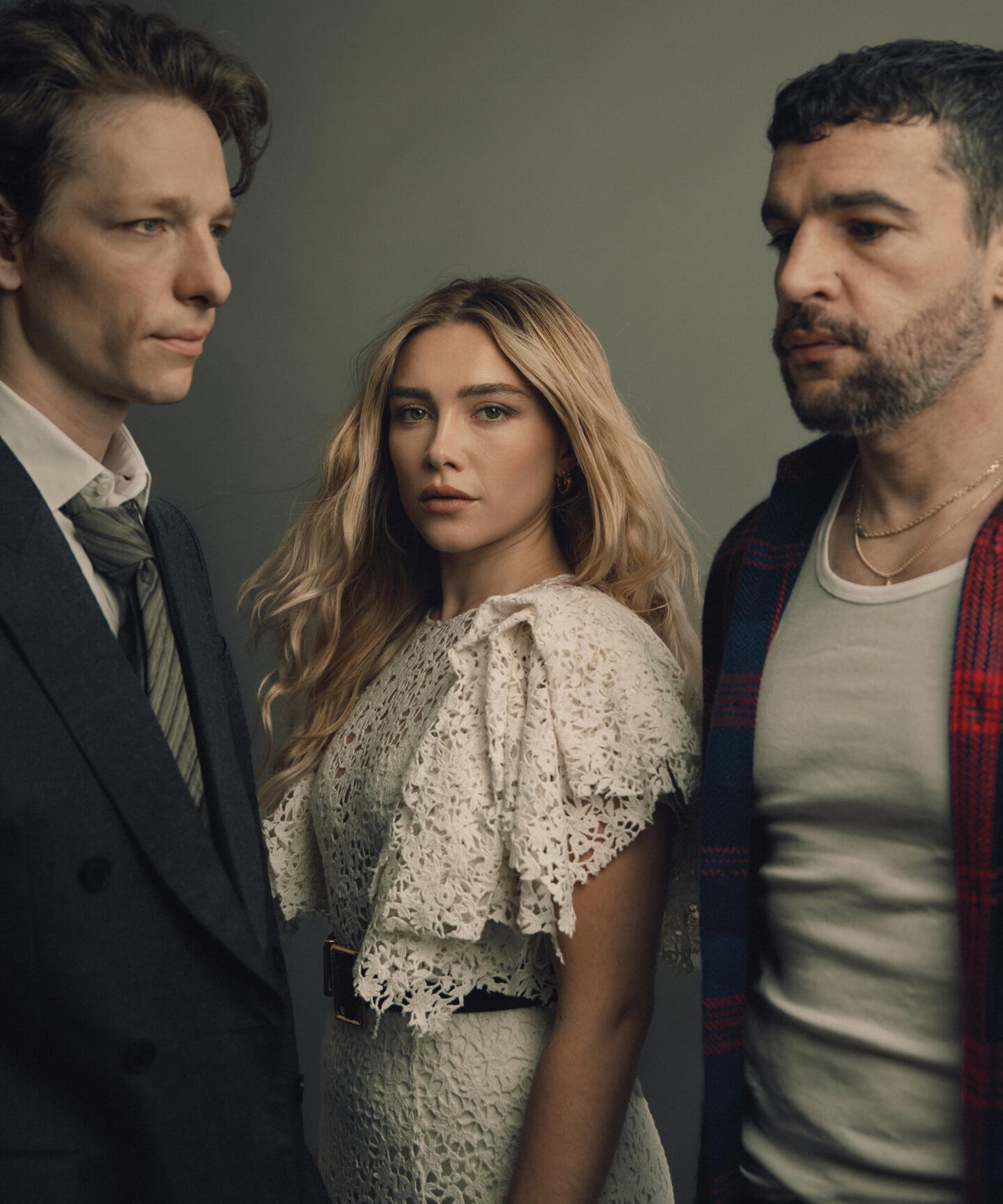
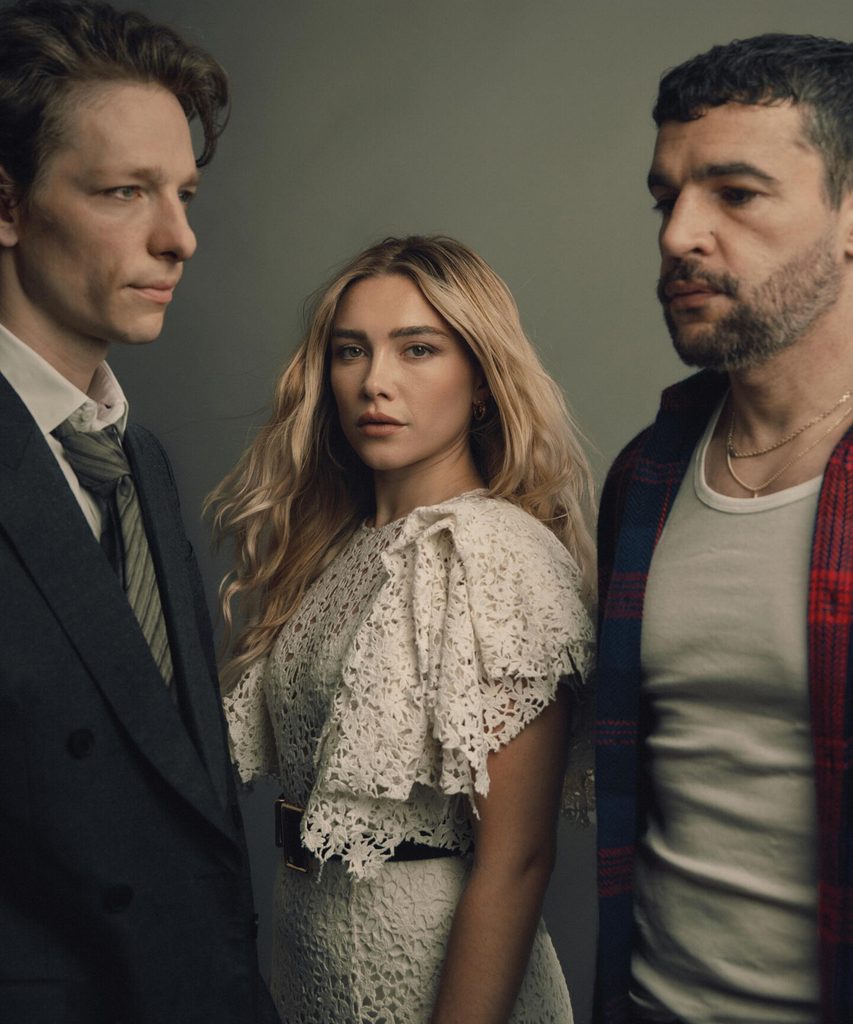
The story initially brings us into the complicated relationship between brothers Adam and Charles Trask, played by Christopher Abbott and Mike Faist. The two could not be more different, but their lives have been shaped by the same difficult childhood and an intense relationship with their father, Cyrus. When Cathy enters their world, she becomes entangled with both brothers before ultimately marrying Adam and following him west to California.
California introduces another group of characters who become just as important to the story. There’s Samuel Hamilton, played by Ciarán Hinds, whose warmth and wisdom make him an important presence in Adam’s life, and Lee, played beautifully by Hoon Lee, who becomes far more than an employee in the Trask household. As the story moves into its second generation, Adam and Cathy’s twin sons, Cal and Aron, played by Joseph Zada and Joe Anders, become central to a story that begins to echo the relationships and rivalries that came before them.
And that is about as much as you should know before watching it. Part of the pleasure of East of Eden is discovering who these people really are.
The series is patient with its characters. It allows you to get close to them before revealing the parts of themselves they would probably rather you didn’t see. Someone you feel enormous sympathy for in one episode can frustrate you in the next. Someone who appears cruel can suddenly become painfully human. There were multiple moments when I realized my feelings toward a character had completely changed without the series ever announcing that I should feel differently.
That moral messiness is where East of Eden is at its best. No character is entirely without fault, and no one seems to have a complete understanding of the ways their own choices affect the people around them. These aren’t characters divided neatly into heroes and villains. They’re people who love each other and hurt each other, sometimes in the very same moment.
Visually, the series gives all of that emotional turmoil an enormous canvas.
The cinematography is stunning. The mountains, open land, farms and seemingly endless skies give East of Eden the scale you want from a generational Western saga, while the camera can suddenly make the story feel incredibly intimate. Interestingly, those California landscapes weren’t actually filmed in California: much of the production used New Zealand’s South Island to recreate the Salinas Valley of the period.
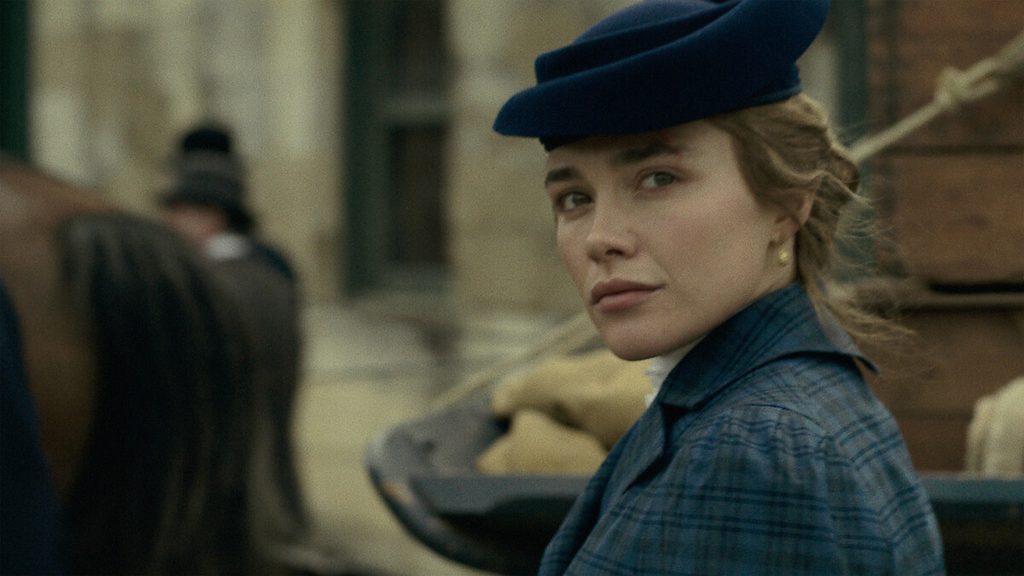
It works beautifully.
There is a harshness to the landscape that matches the story. This is a world in which people are building homes, businesses and entire futures while carrying enormous emotional baggage with them. The beauty never makes the world feel soft. Instead, it makes some of its darkest moments even more jarring.
The performances are equally strong. Abbott gives Adam an earnestness that makes both his goodness and his shortcomings believable. Faist brings a volatility and vulnerability to Charles that keeps him from ever becoming simply “the difficult brother.” Hinds brings tremendous warmth to Samuel, while Lee quietly becomes one of the emotional anchors of the series.
And then there is Florence Pugh. Pugh’s Cathy is the character you will probably spend the most time trying to figure out. She is also the reason East of Eden becomes something more interesting than another beautifully made period drama.
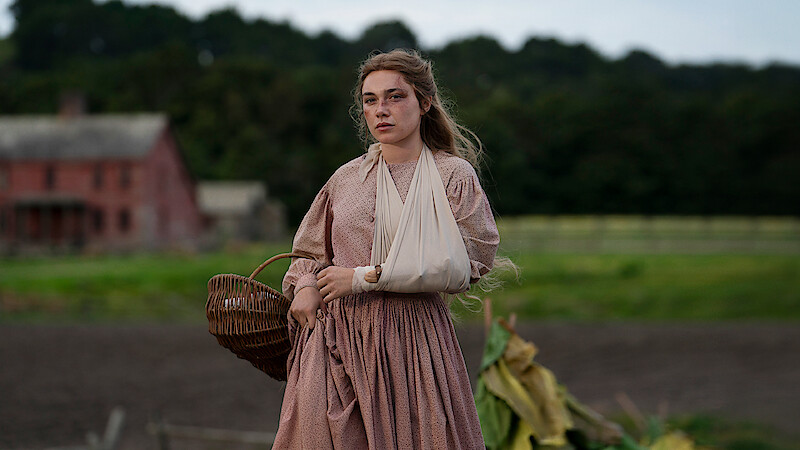
From here, some spoilers are unavoidable.
Cathy undoubtedly causes some of the series’ most shocking pain. She lies. She manipulates. She abandons people. She can be shockingly cruel. There are moments when defending her would be impossible.
And yet, East of Eden asks us to understand her anyway. What fascinated me most about Cathy was her steadfastness in pursuing what she wanted, and her almost complete lack of guilt for wanting it.
Cathy tells Adam what she wants. She doesn’t want to move to California. She doesn’t want children. She doesn’t want the life he has imagined for them. Yet Adam is so consumed by his vision of their future that he seems convinced she will eventually see it too.
She doesn’t.
What happens next is horrifying. Cathy shoots Adam and leaves him and their newborn twins behind. The series never asks us to believe that shooting your husband and abandoning your children is somehow an acceptable response to being unhappy. But it does force us to sit with an uncomfortable truth: Cathy told him she didn’t want this life before he built it for her anyway.
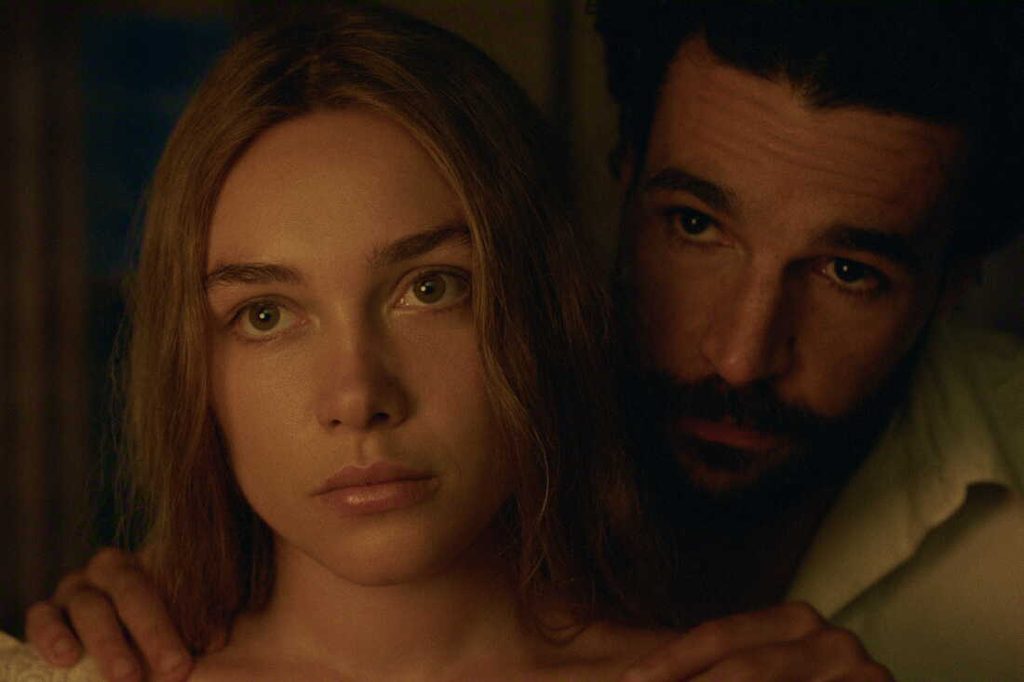
And I couldn’t stop thinking about how differently we might perceive that certainty if Cathy were a man.
A man who doesn’t want children is allowed to not want children. A man determined to pursue a different life can be described as ambitious, restless or independent. Cathy knows exactly what she doesn’t want, and everyone around her seems to believe those desires are negotiable.
They aren’t. That doesn’t make Cathy good. It makes her interesting.
What makes her even more fascinating is the way she processes the damage she causes. Cathy seems capable of leaving people behind and continuing forward as though their pain stays wherever she left them. But when the people she has hurt eventually stand in front of her, when the consequences of her decisions are no longer distant or abstract, we begin to see something different.
She feels it. That distinction became one of the most interesting parts of Pugh’s performance for me. Cathy isn’t necessarily incapable of guilt or empathy. She seems capable of compartmentalizing them until she is forced to look directly at the human being carrying the wound she created.
But the more East of Eden unfolded, the less I thought that quality belonged only to Cathy. Nearly everyone in this story understands the pain that has been inflicted upon them better than the pain they inflict upon others. Adam is perhaps the clearest example. For much of the series, he is fundamentally a good man. He loves his sons. He wants to build something meaningful. It would be easy to position him as the moral counterweight to Cathy. Except he isn’t.
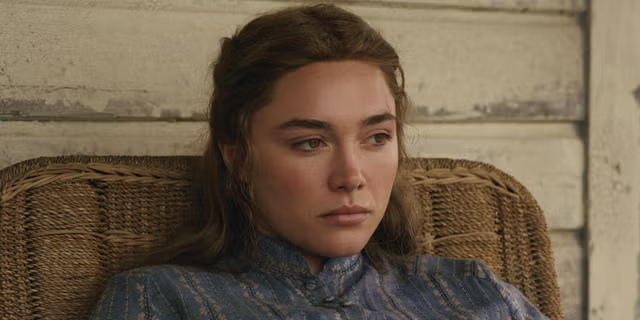
As his sons grow older, we see how Adam’s own wounds affect the way he parents them. Cal and Aron are very different young men, and Adam does not always love them in ways that feel equally generous. Cal, in particular, feels the sting of his father’s judgment. Adam can hurt his son deeply while seemingly failing to understand the magnitude of what he has done.
And suddenly, Cathy doesn’t feel like the only person in this story who has trouble seeing herself through someone else’s eyes. That’s what ultimately made East of Eden so compelling to me.
It would be much easier if Cathy were the villain and everyone else were simply dealing with the destruction she left behind. But that’s not the story we’re given. Instead, we’re watching generations of people who are capable of enormous love and enormous harm, often without realizing how closely the two can exist beside each other.
Cathy is simply the most extreme version of it.

She causes the most shocking pain. She makes choices that are the hardest to forgive. But she is surrounded by people who also make decisions based on what they want, what they believe is right and what they need from the people around them. The difference is that Cathy rarely disguises her desires as something else. Maybe that’s why she is so unsettling.
And maybe that’s why Florence Pugh’s version of Cathy works so well as the heroine of this adaptation. Not because Cathy is secretly good. Not because the series absolves her. And certainly not because we’re supposed to agree with everything she does.
We’re simply allowed to understand her without being required to forgive her. For a character we’re not supposed to love, that may be the most radical thing East of Eden asks us to do.
 Social Club