




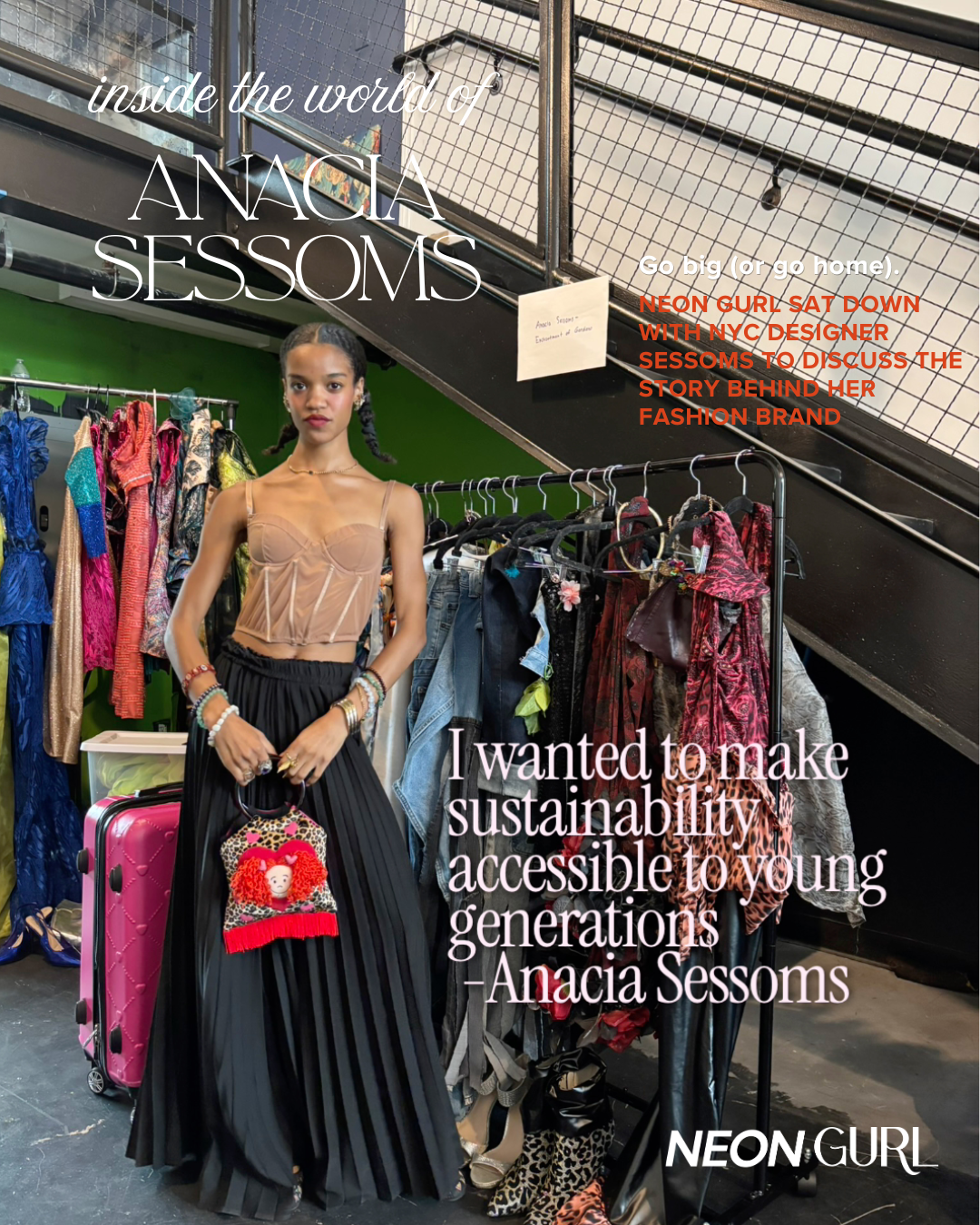
I sat down with Anacia Sessoms, a young fashion designer based in New York City, to discuss her journey into the fashion world, and it quickly became clear that her work is not just about clothing. It is about identity, memory, and the quiet power of creating something entirely your own.
Sessoms is the founder of Enchantment of Gardens, a brand rooted in sustainability, spirituality, and storytelling. Her designs are textured, colorful, and deeply intentional, but her path into fashion was anything but traditional.
“I didn’t know what I wanted to do,” she tells me. “I didn’t want to go to college, but I still went anyway because my parents wanted me to be stable and have something I’m doing. But I always had a feeling that I wanted to do art.”
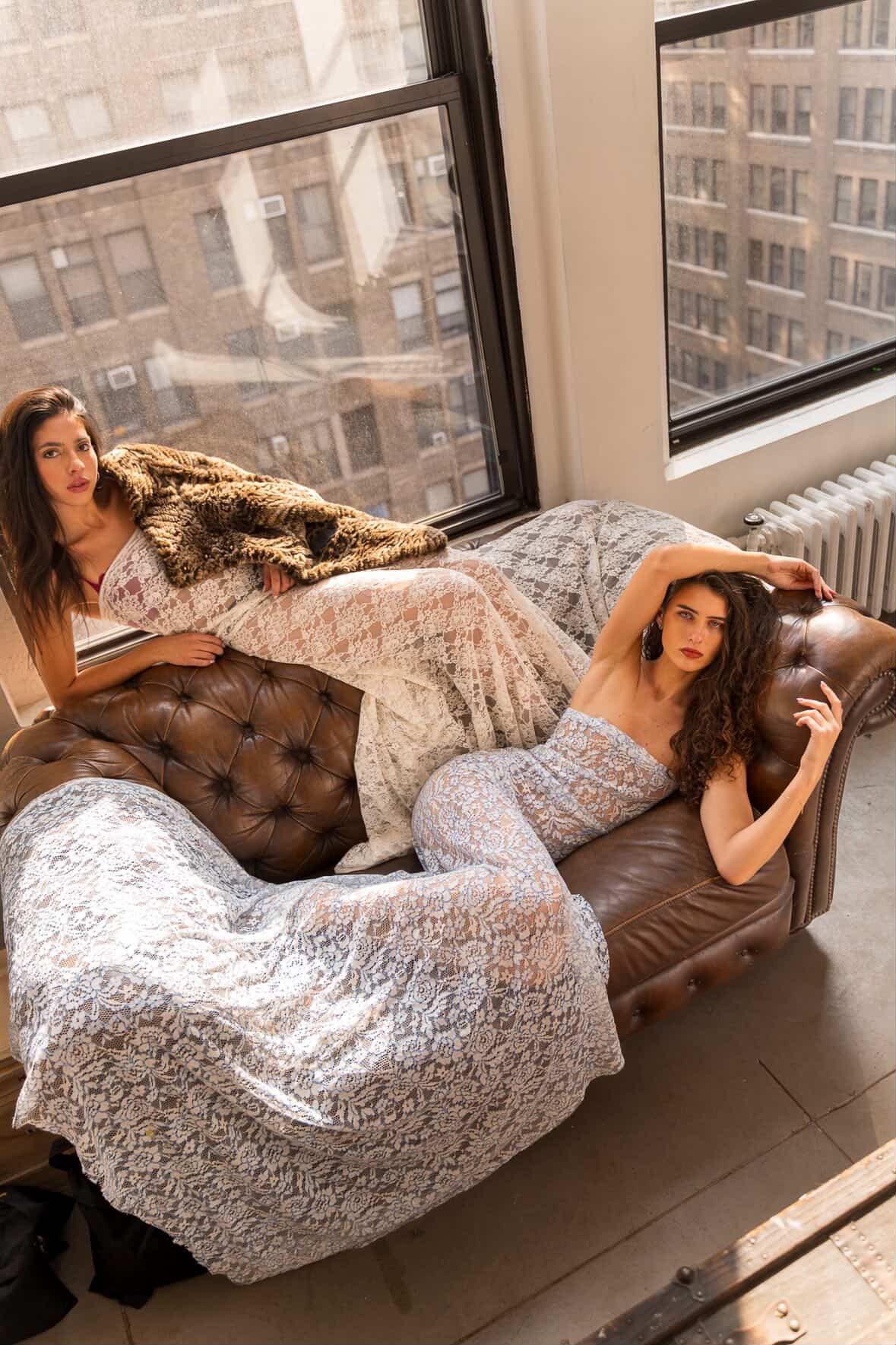
Sessoms Designs Photography by David Dixon
That tension between expectation and instinct shaped her early years. Growing up with a mother who encouraged her to express herself through fashion and a father who ran his own baking business, Sessoms was surrounded by both creativity and entrepreneurship. Watching her father build something from the ground up left a lasting impression. “I saw how much he lived through his passion, how much that made him happy,” she says.
She carried that perspective with her to Montclair State University, where she studied art but quickly realized that the traditional structures of fashion education were not aligned with the kind of designer she wanted to become. “I didn’t like how the fashion program at my school was being taught. If I don’t like something, I’m not going to do it. I’m going to figure out how to do it myself.”
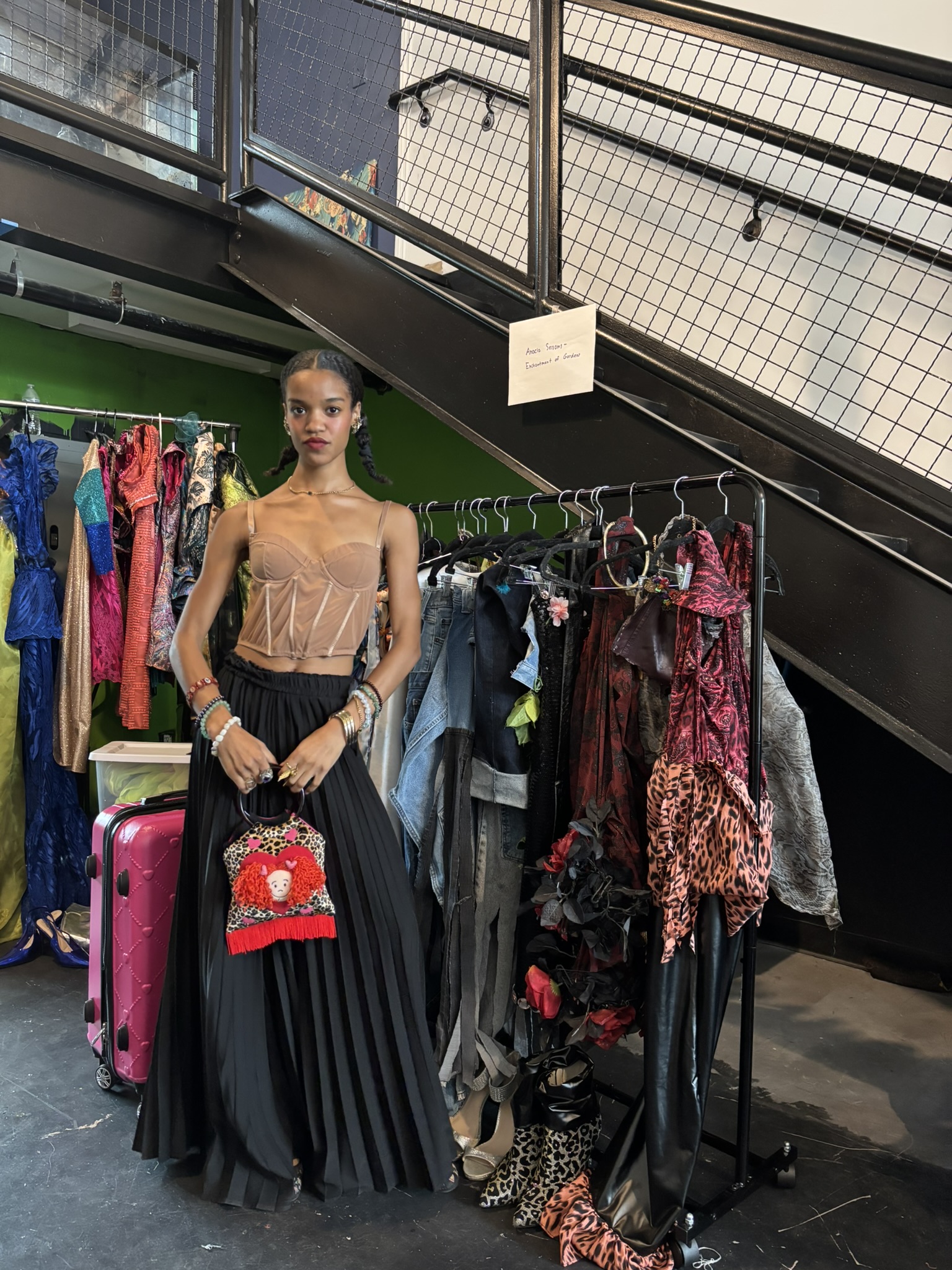
Enchantment Of Gardens at Newark Fashion Week Festival Season 2 September 2025
That decision to trust herself would become a defining pattern in her career.
The concept for Enchantment of Gardens began during the stillness of the pandemic, a period Sessoms describes not as a setback, but as a reset. “I honestly want to say COVID saved my life,” she says. “I needed time by myself to get grounded and refocus on myself.”
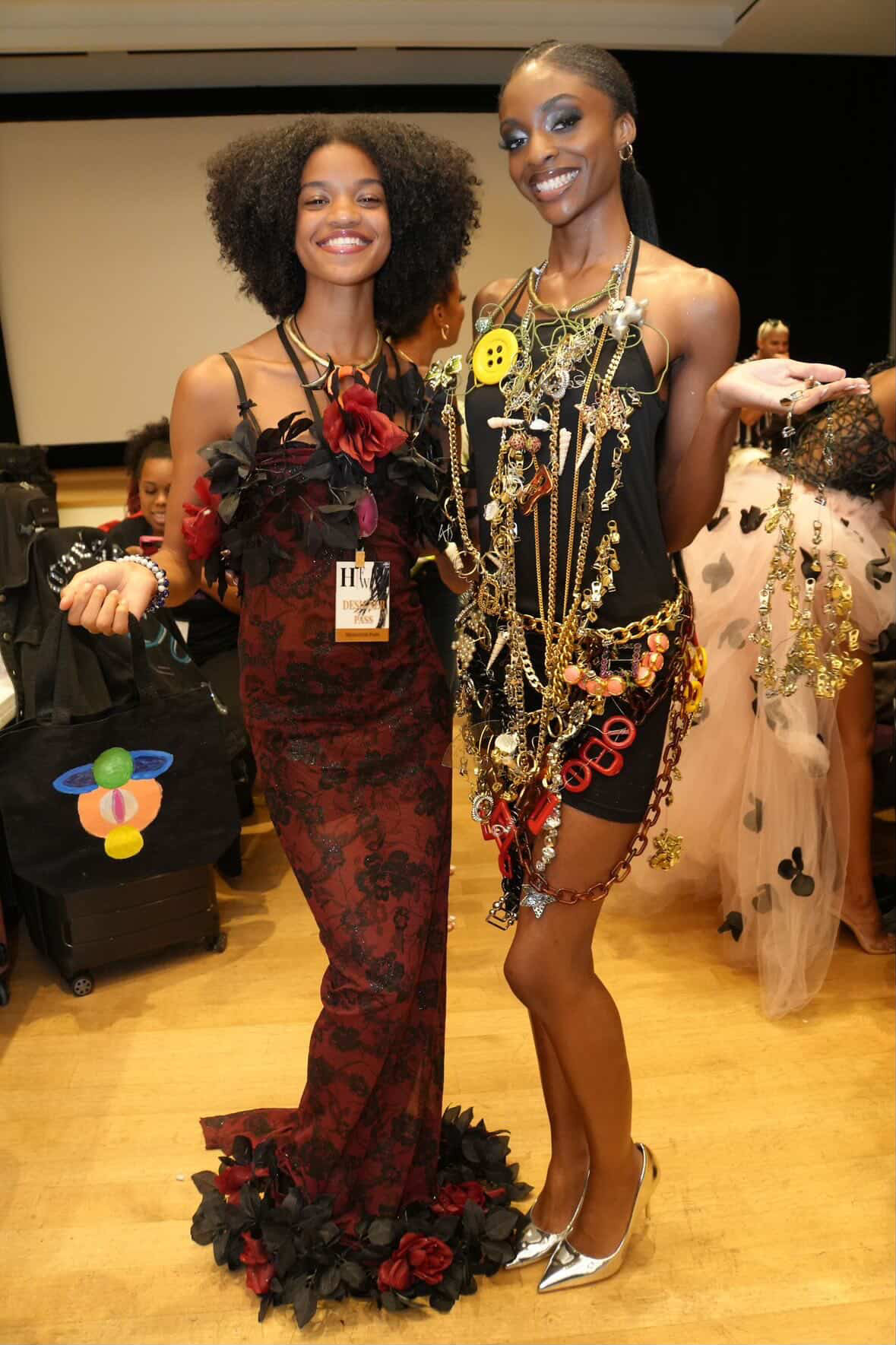
In that stillness, she turned inward. She meditated, studied spirituality, and reconnected with her Afro-Indigenous and Bajan heritage. Living near nature, surrounded by flowers and changing seasons, she found inspiration in the simplest details.
“Nature is very magical to me,” she explains. “I feel like it really healed me being around a lot of colors and outside.”

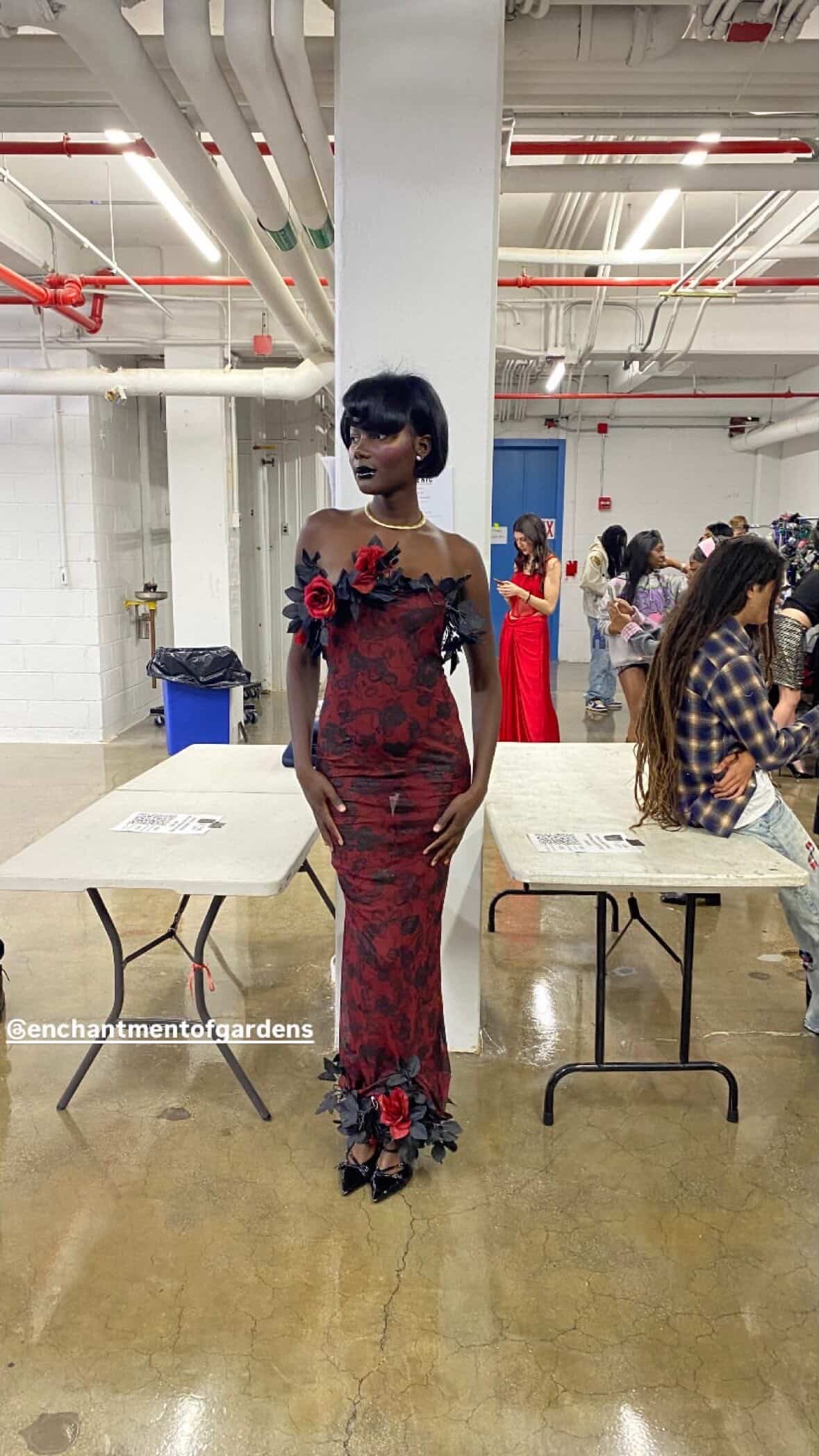
Enchantment Of Gardens at New York Fashion Week: Unlucky in Love Fashion Show February 2026 – Photographer: Julian Valgora
That healing became the foundation of her brand. The name Enchantment of Gardens reflects both a personal transformation and a broader philosophy. Gardens, in her view, are not singular. They are ecosystems. “It’s not just one flower. It’s a bunch of different plants working together,” she says.
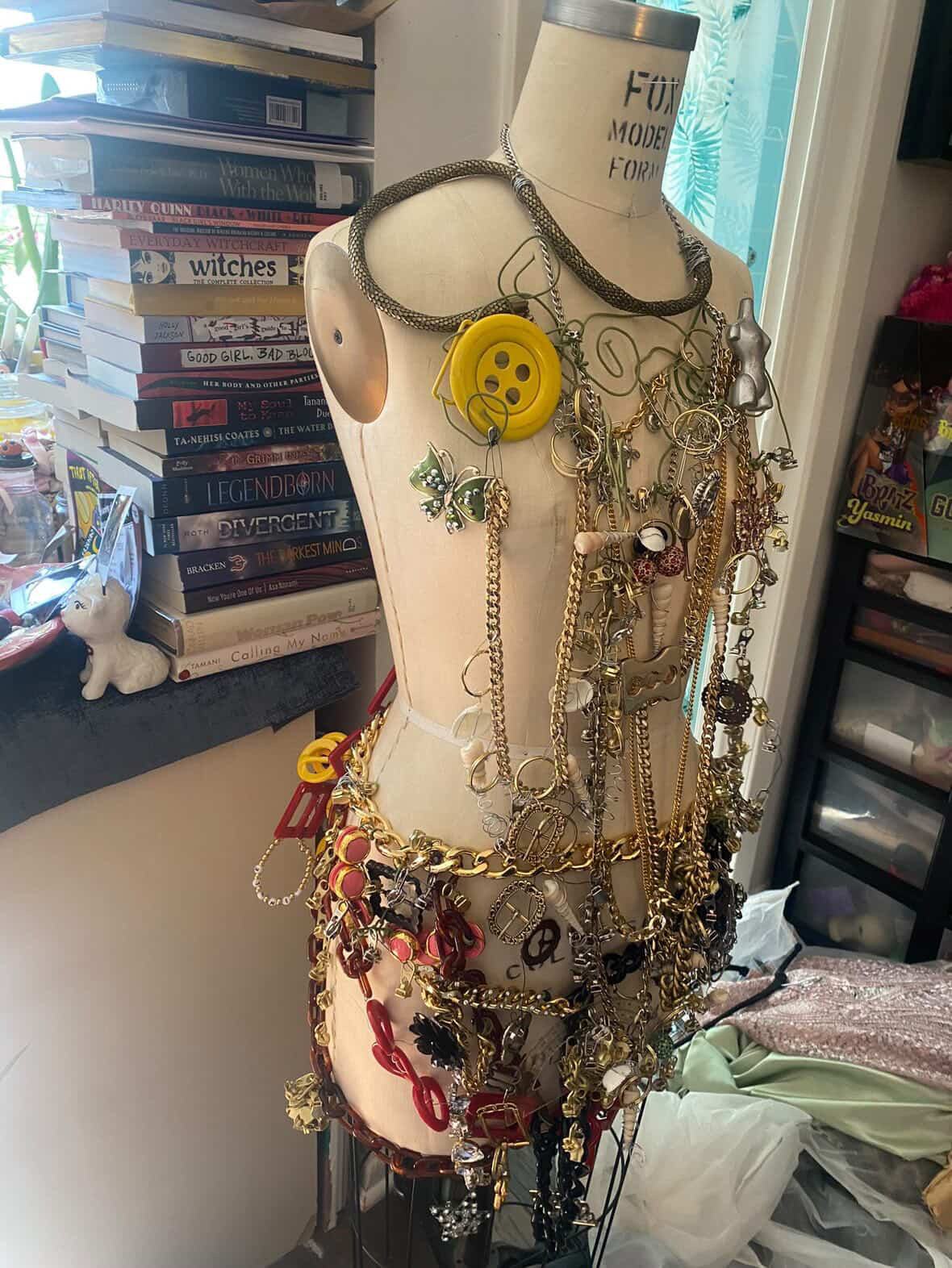
Her designs follow that same logic. Each piece is constructed from sourced, donated, or thrifted materials, often hand-sewn and reimagined into something entirely new.
“I started upcycling old clothes and fabrics that I had around my house,” she says. “I wanted to make sustainability accessible to younger generations.”
In an industry driven by speed, Sessoms moves differently. She does not sketch every design in advance or force productivity. Instead, she allows inspiration to arrive naturally. “I don’t believe in being productive every day and making something every day,” she explains. “That’s not sustainable. You disconnect from your creativity.”
This refusal to rush is not just an artistic choice. It is a critique of the industry itself. Fast fashion, in her eyes, is not only about clothing. It is about a mindset.
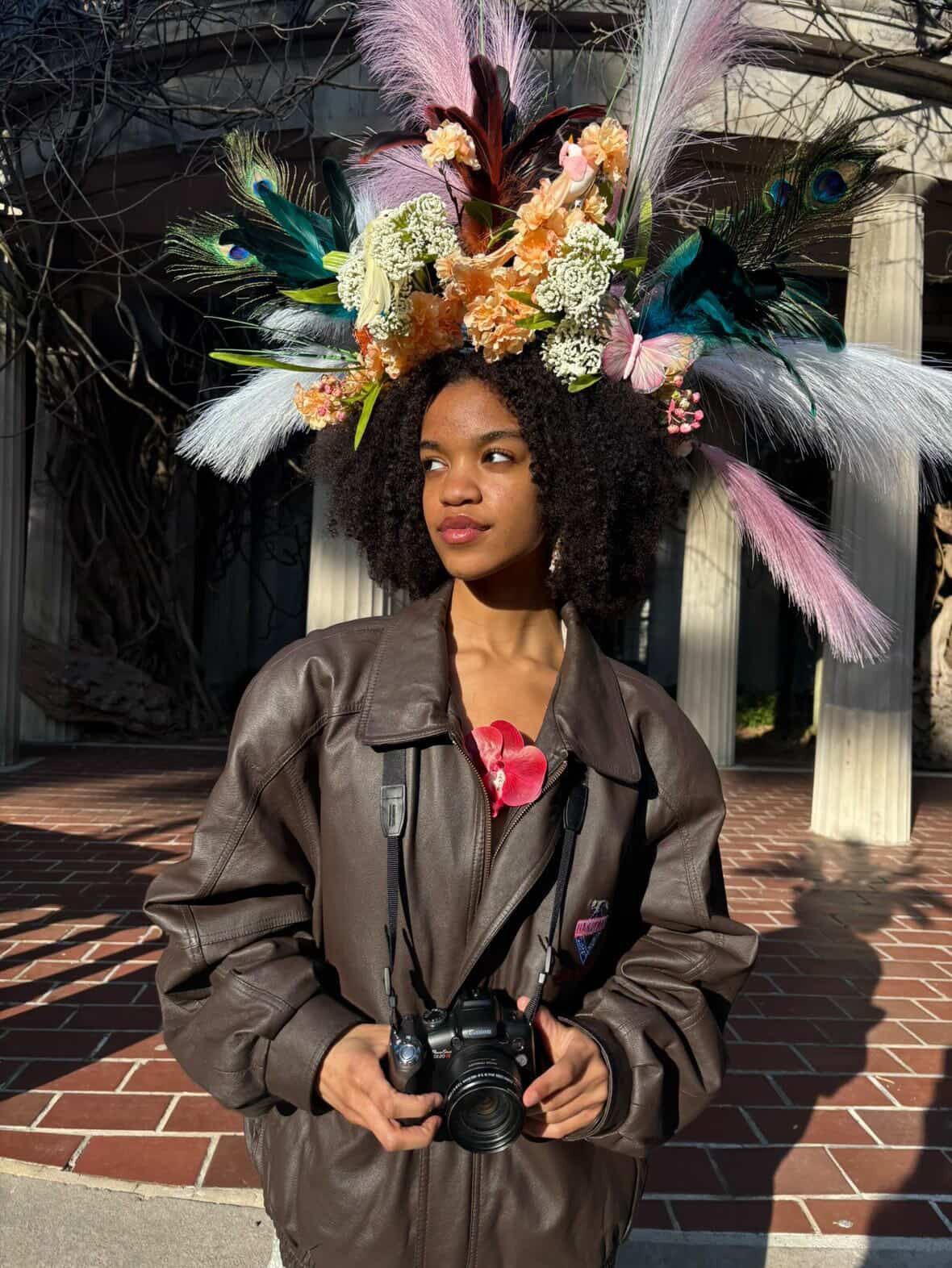
“I believe fast fashion is a fast way of living,” she says. “You’re just throwing things out without thinking about what you’re making.”
Instead, her garments are deeply considered. They are often one of one. They are meant to feel personal, almost sacred. “It’s like having a pet,” she says, laughing. “Nobody else has your pet. That’s your bond.”
That intimacy extends to how her clothes fit and who they are made for. Sessoms is intentional about designing beyond the narrow standards that have long defined fashion. “Most women aren’t built like a size 0 or 2,” she says. “Nobody wants to feel like they have to pressure their body to fit clothes.”
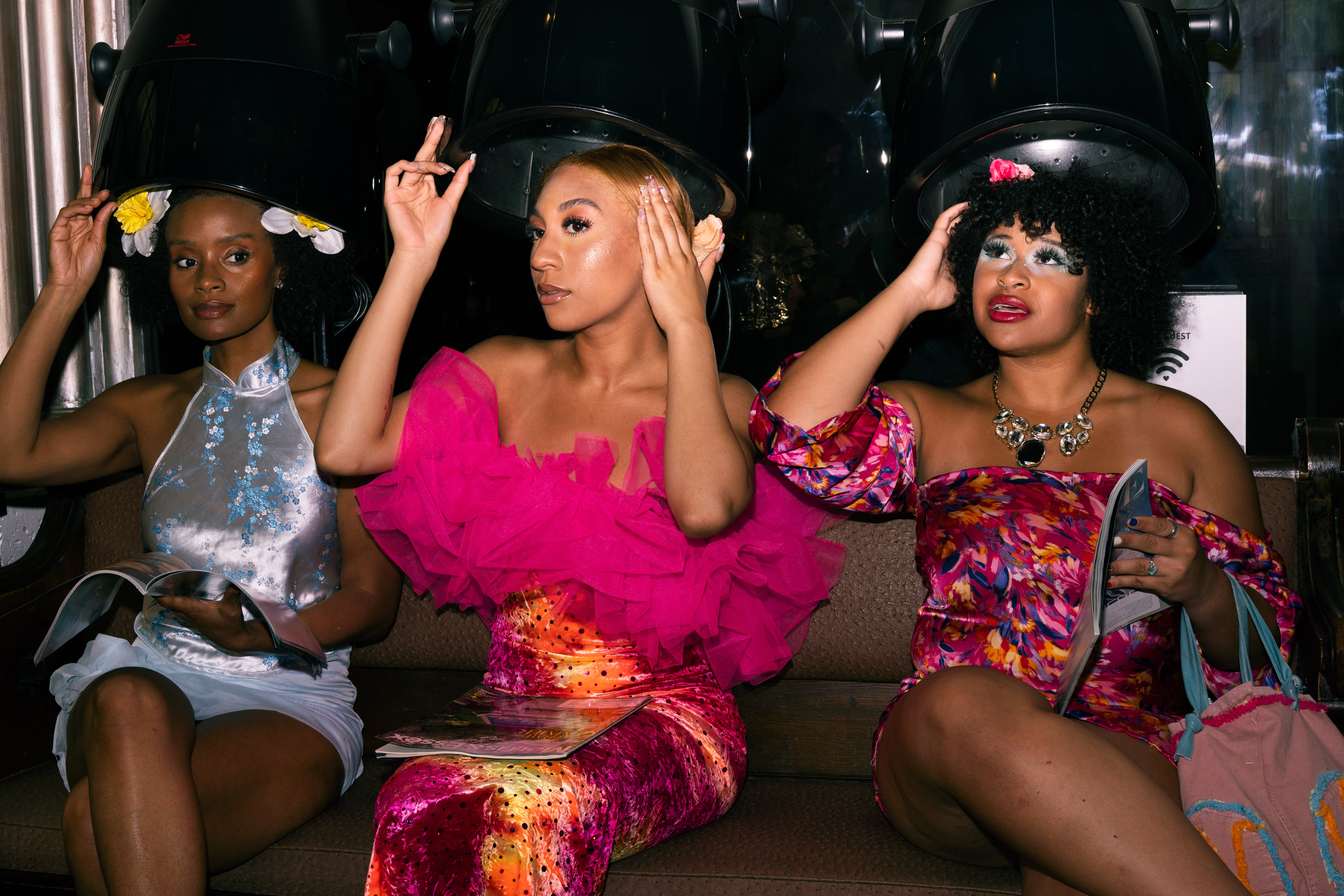
Coral Collection: Photographer: Samuel Sylvester
Her pieces are designed to adapt to the body, not the other way around. She has dressed people across a range of sizes in the same garment, a quiet but powerful rejection of traditional sizing systems.
That commitment to inclusivity is shaped by her own experience navigating the industry as a young Black designer. “It’s been hard. It’s been so hard,” she says plainly.
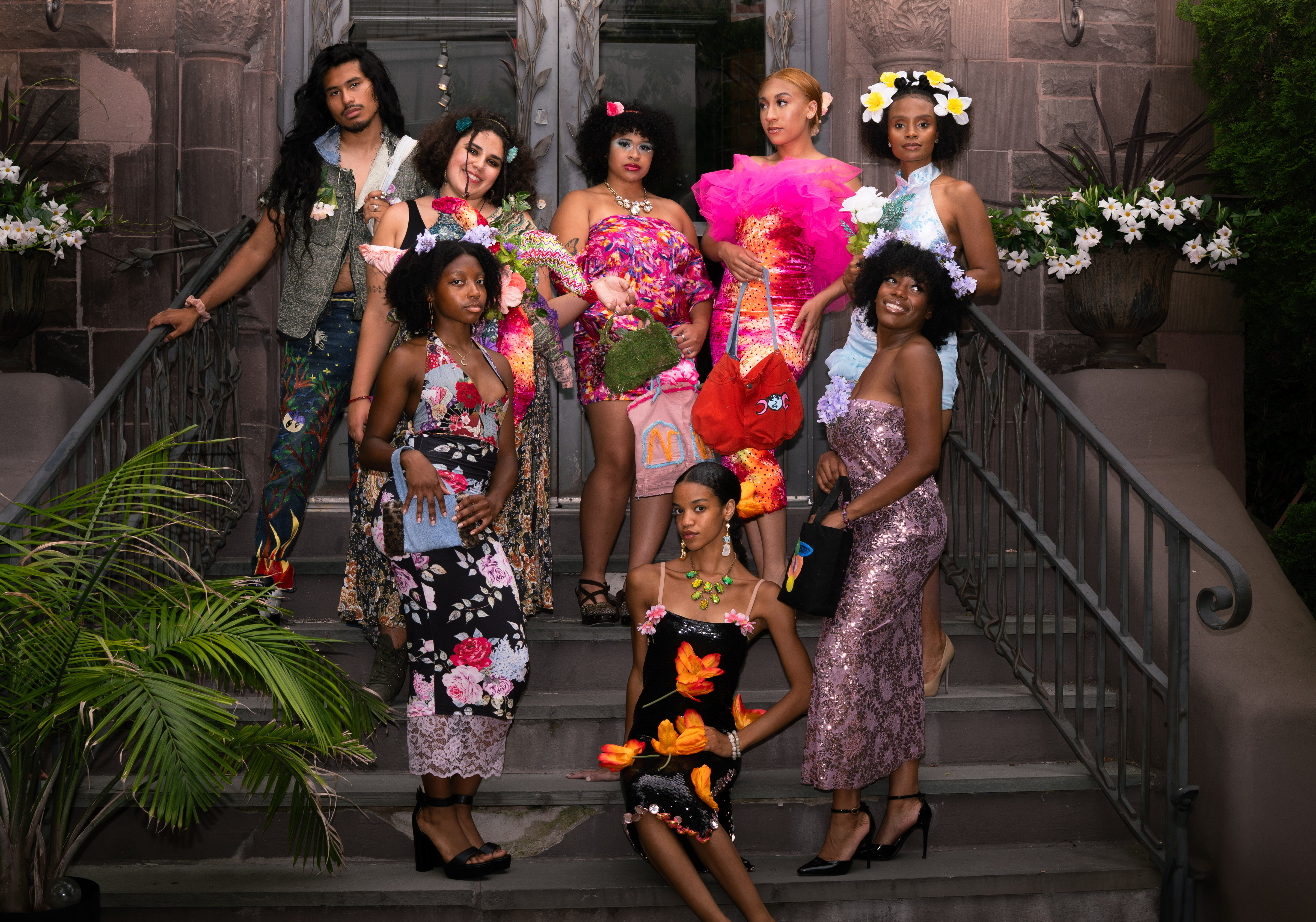
Coral Collection: Photographer: Samuel Sylvester
At Montclair State, she often found herself in spaces where representation was limited and support was inconsistent. Rather than wait for change, she created it. As president of her school’s fashion club, she rebuilt it into a thriving community, drawing in students who had never seen themselves reflected in fashion spaces before.
“I had like 30 people in there weekly,” she says. “A lot of people of color came out who weren’t even fashion majors.”
She organized shows, taught students how to model, and created a space where creativity felt accessible. The impact extended far beyond the classroom. Many of those students continued modeling and engaging with fashion long after their first experience with her work.
“A lot of people don’t feel confident getting dressed up,” she says. “They feel like they don’t deserve to shine. And I feel like everybody deserves to shine.”
That belief sits at the core of everything she creates.
When I ask how she wants people to feel when they wear her designs, her answer is immediate. “I want them to feel empowered and happy,” she says.
But empowerment, in her world, is not about perfection. It is about freedom. Freedom from comparison. Freedom from trends. Freedom from the quiet pressure to conform.

“Fashion nowadays doesn’t make people shine individually,” she says. “It becomes a competition.”
Her work resists that entirely. It invites wearers back into themselves.
That sense of purpose has already taken her into rooms many young designers dream about. During the summer of 2025, Sessoms served as an Academic Specialist and teacher for Vogue Summer School under Vogue Business in New York City, an experience that marked a major turning point in her career. She taught over 60, international and American fashion students 14-18.
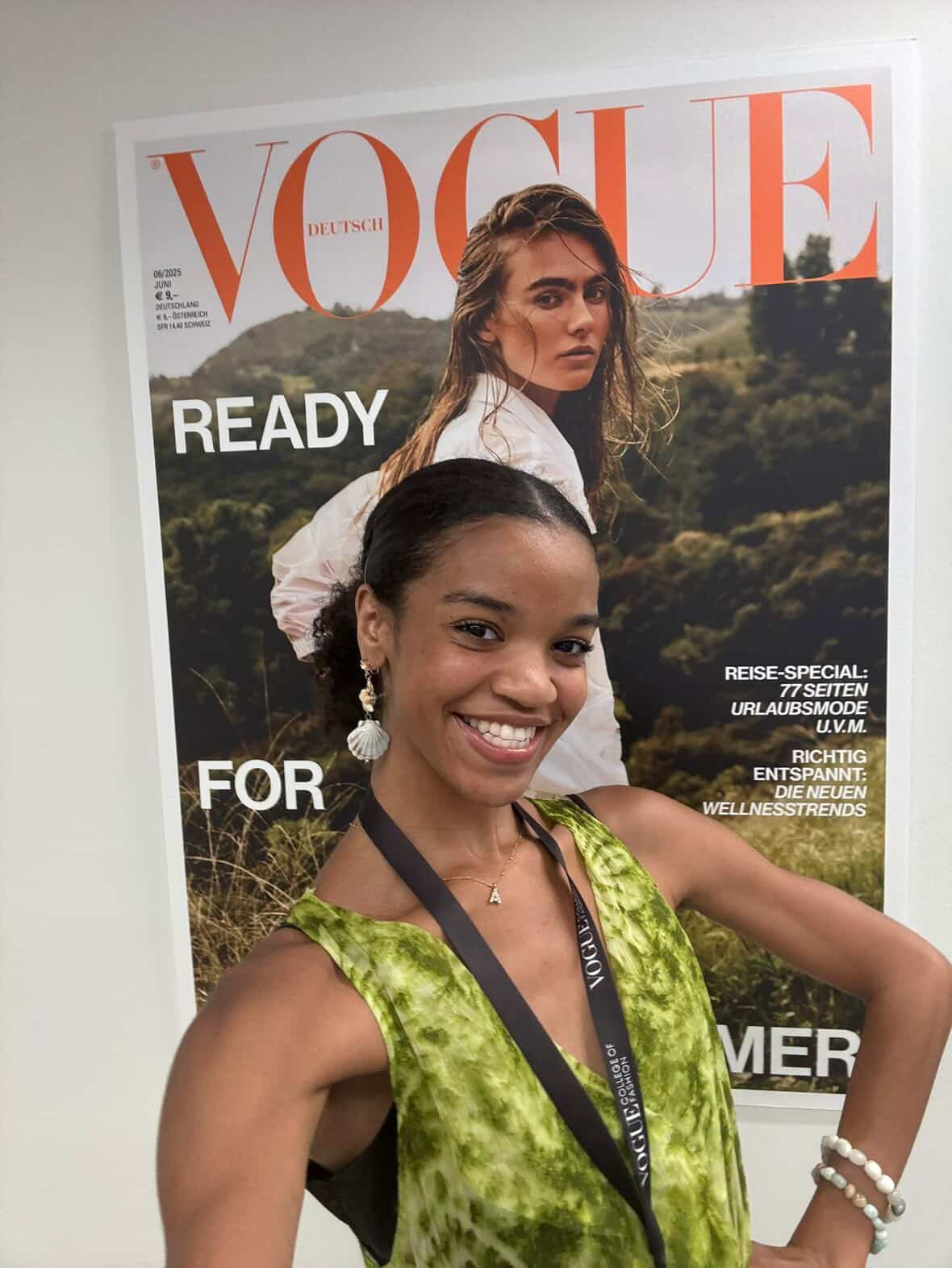
There were moments that felt almost surreal. Anna Wintour waved to her in the hallway. She received a private tour of the Coach archives. She tried on a one of a kind Armani garment.
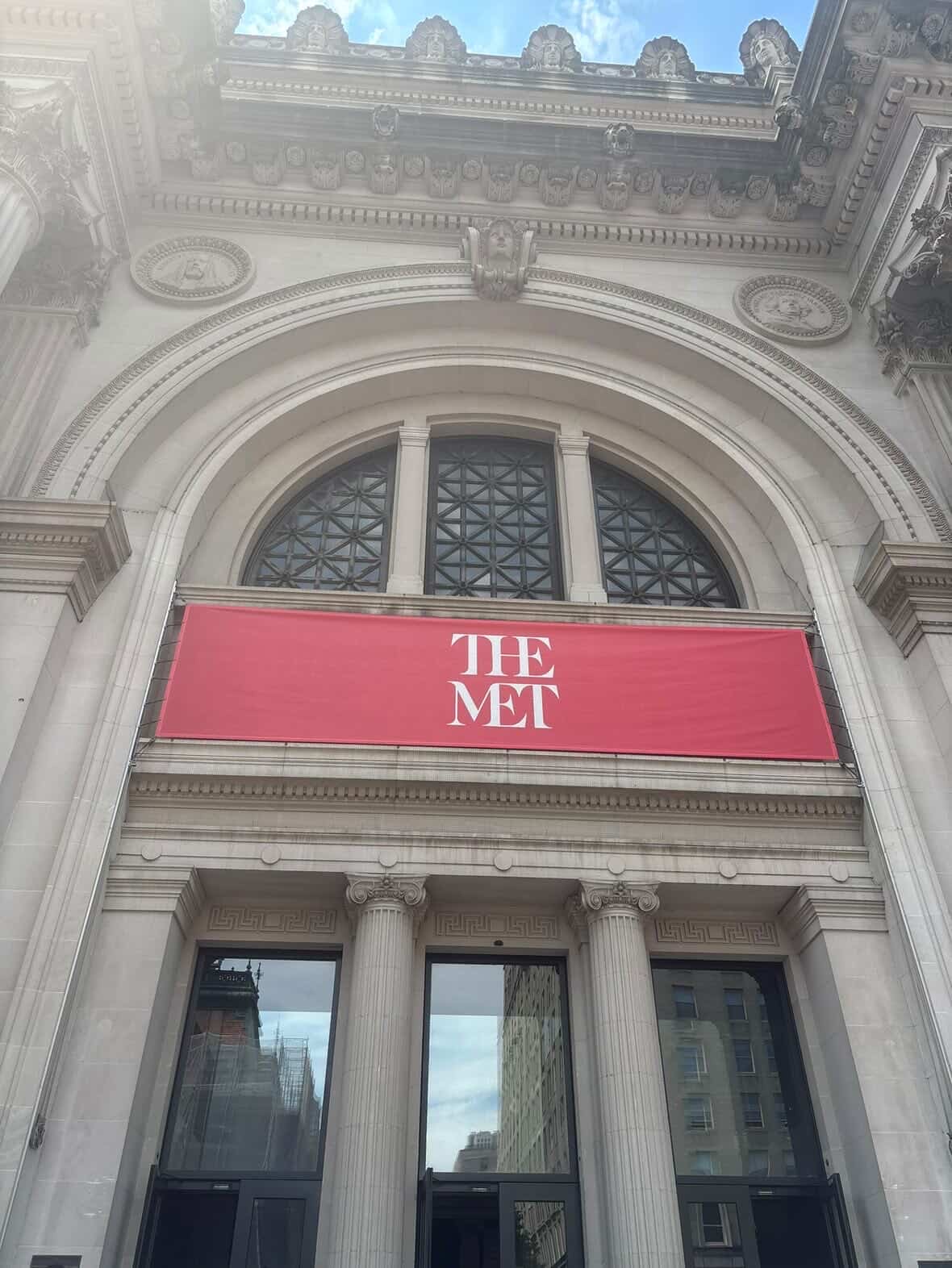
But what stayed with her most was not the proximity to power. It was the people she was teaching. Her students, she says, inspired her. They reminded her why she started in the first place.
Even now, as she continues to build her brand between New Jersey and New York, she is clear about the kind of designer she wants to be. She is not interested in fitting into spaces that do not align with her vision. “You have to really make sure it aligns with your vision as a designer,” she says.
That clarity feels rare, especially at such an early stage in her career.
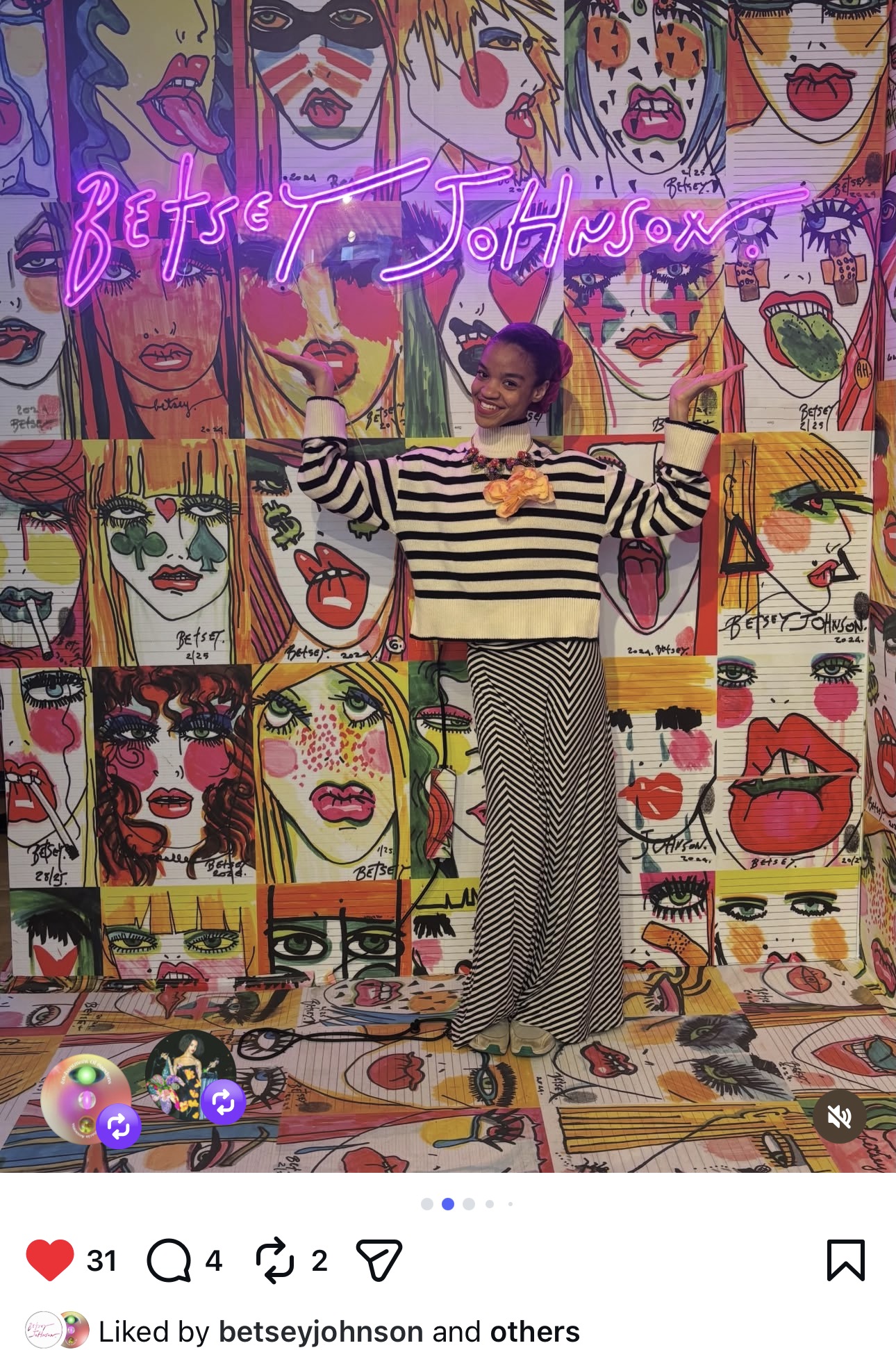
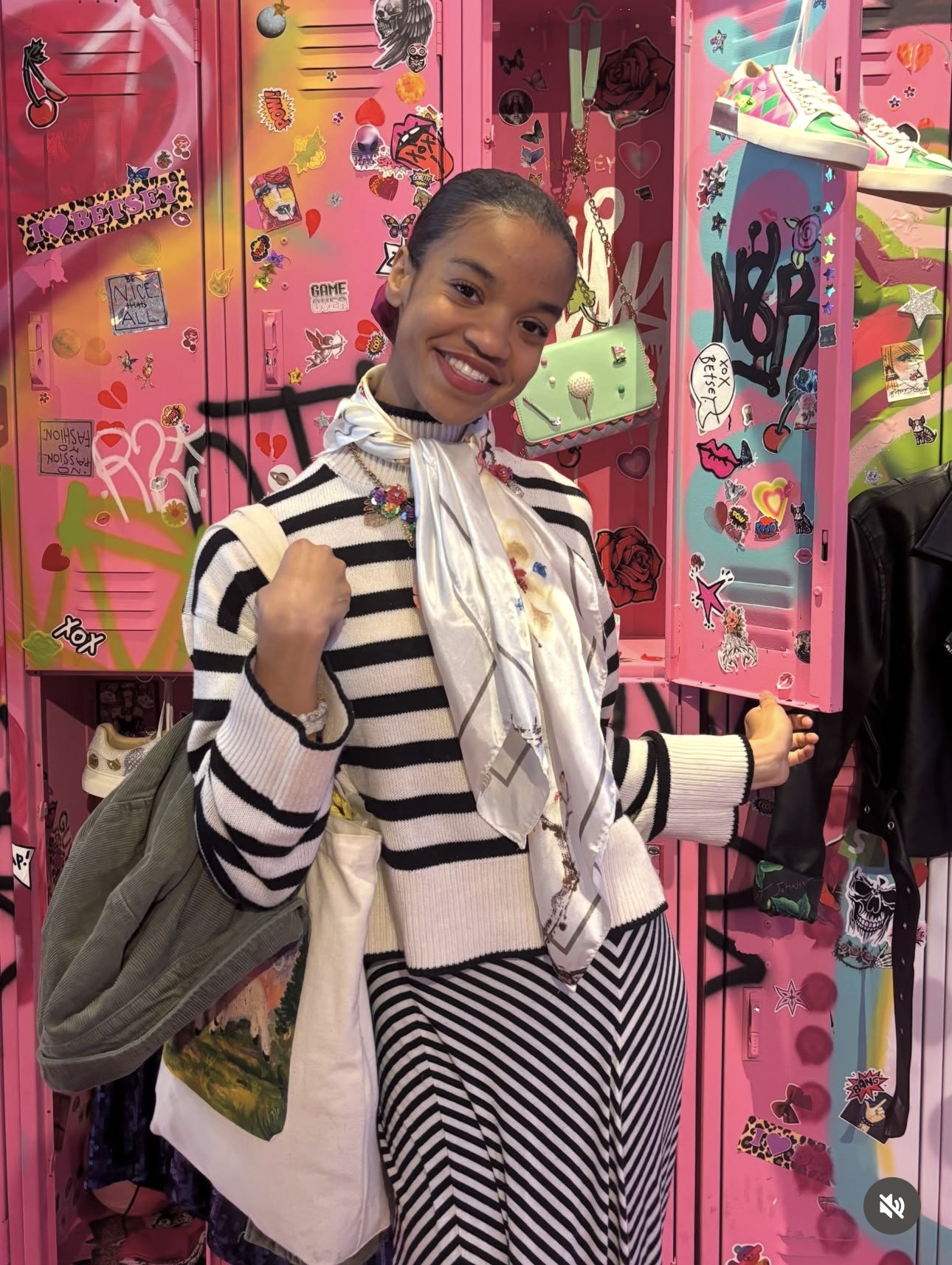
Sessoms draws inspiration from designers like Betsey Johnson and Vivienne Westwood, creatives who built lasting careers by refusing to conform. She is equally inspired by global fashion communities, from Lagos to India, where color, culture, and craftsmanship remain central.
“Designers of color love color,” she says. “You can tell they like what they’re doing.”
That joy is evident in her own work. It shows up in the fabrics she chooses, the silhouettes she creates, and the stories she tells through each piece.
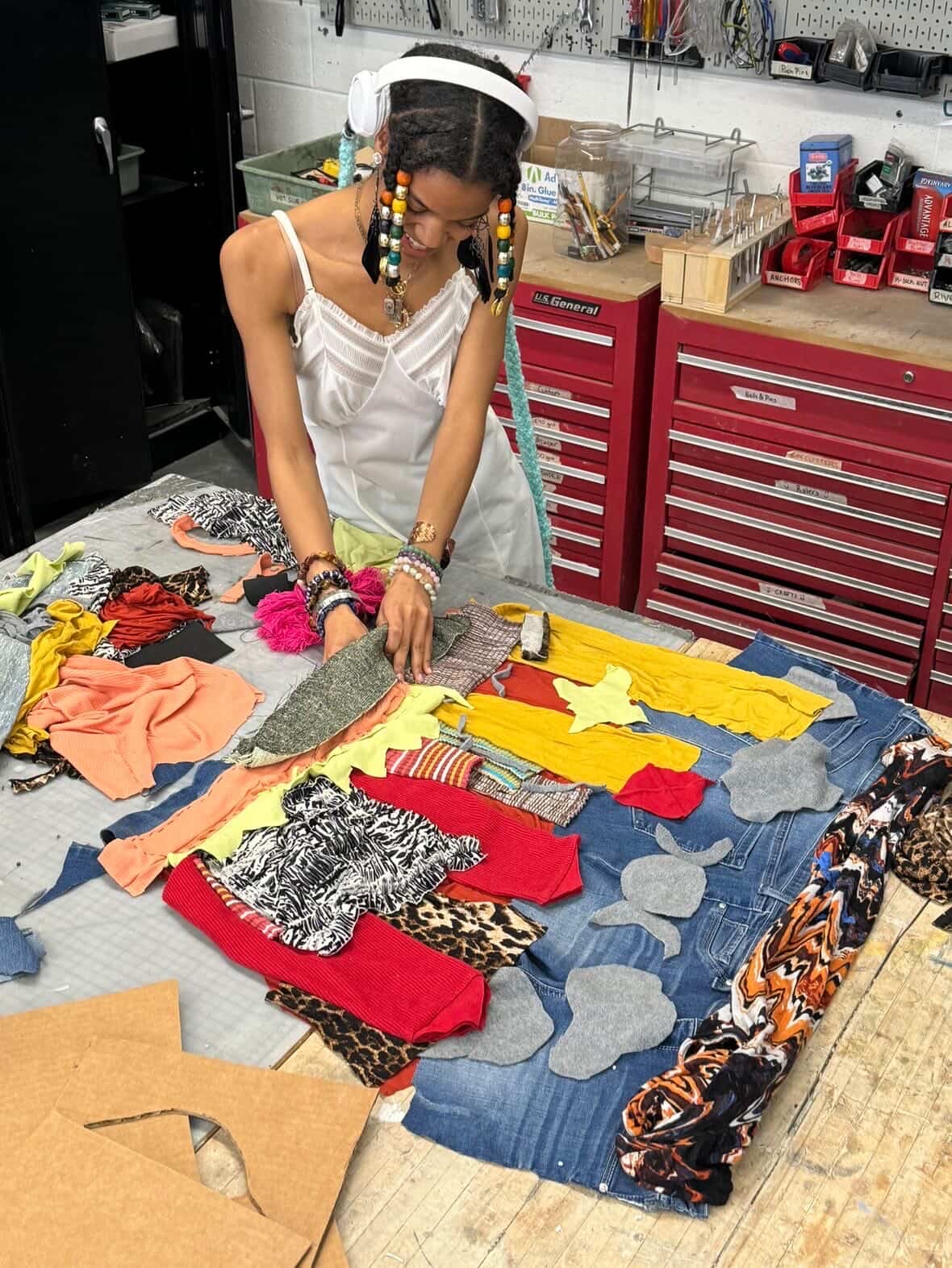
At its core, Enchantment of Gardens is not just a fashion brand. It is a reflection of a young woman learning to trust her instincts, honor her heritage, and build something meaningful on her own terms.
In a world that often rewards speed, sameness, and spectacle, Anacia Sessoms is choosing something slower, deeper, and far more lasting.
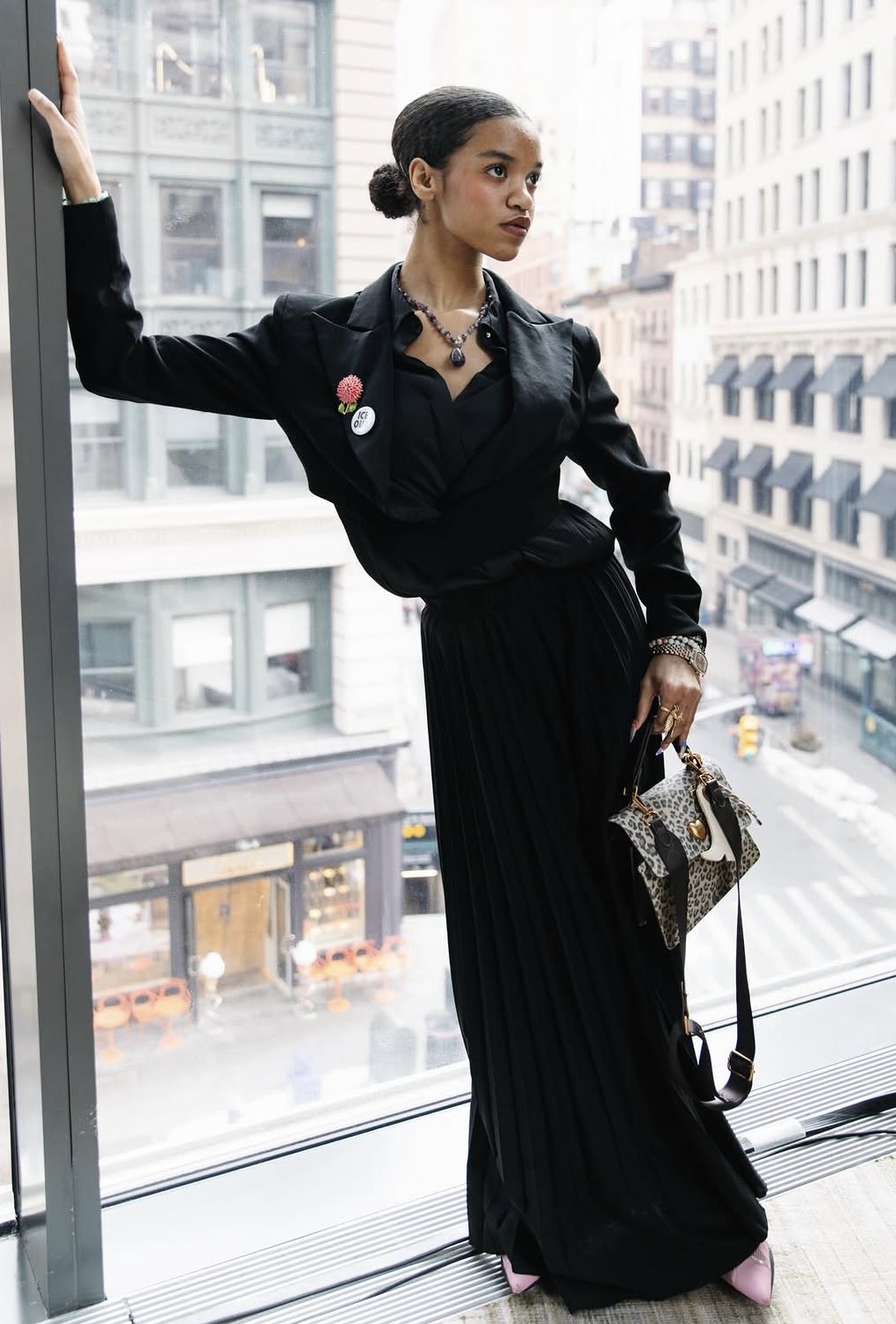
And that choice might be exactly what sets her apart. For Sessoms, being a Neon Gurl is not about fitting into a mold. It is about creating your own.
